

“Hello, this is John Henry McDonnell calling from the Nevada Northern Railway Museum. I don’t suppose you have any Alco 244 Cylinder Liners layin’ around, do ya?”
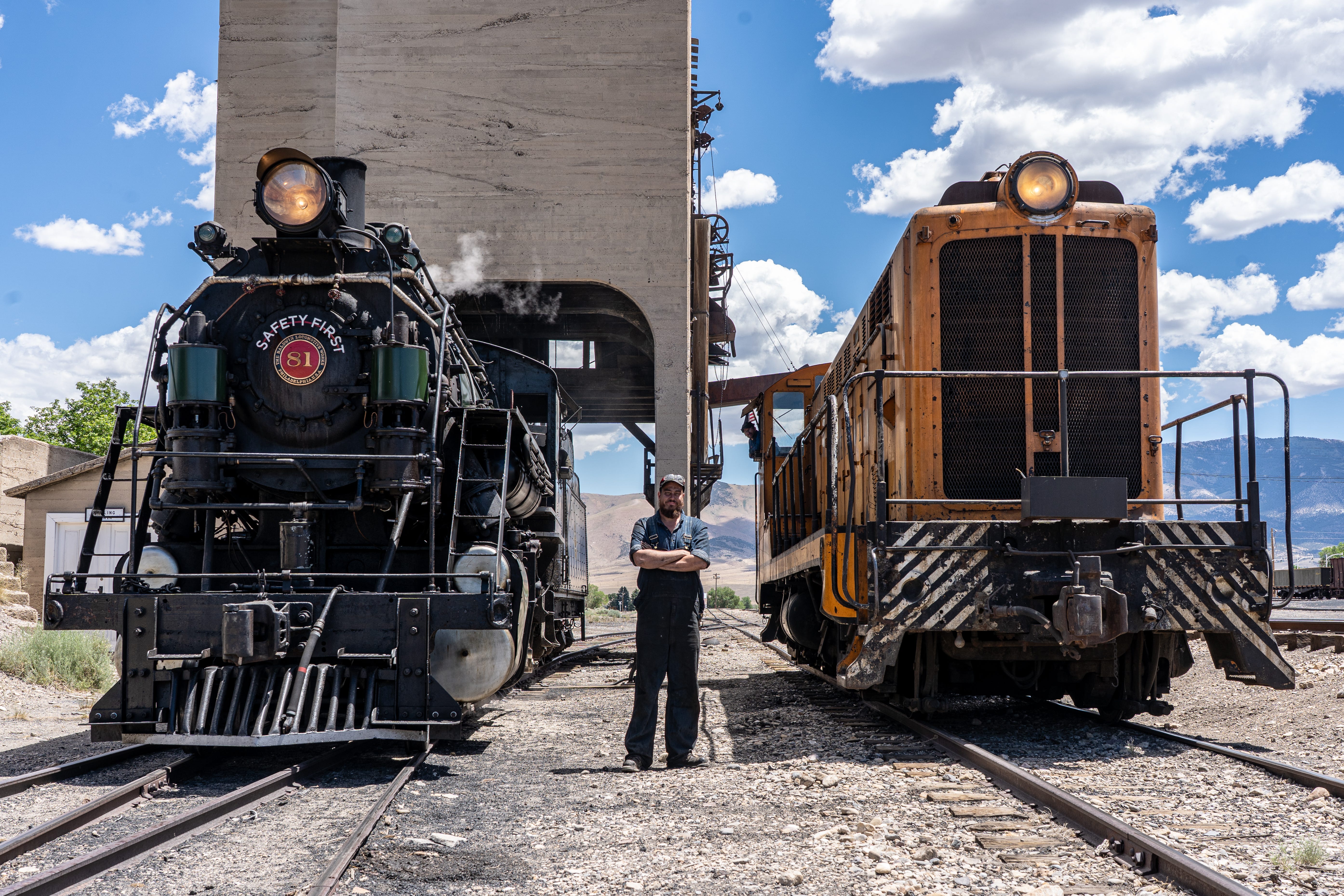
John Henry McDonnell sits in the Master Mechanic’s office of a dense historical site in remote Nevada that boasts a campus of industrial heritage, including a fleet of operating locomotives and trains. He had grown fond of a particular class of locomotive - Alco RS series diesels – of which the Nevada Northern Railway Museum had two at the time. However, with both RS-2 No. 105 and RS-3 No. 109 out of service due to a lack of cylinder liners for the insides of their massive prime movers, John Henry set out on a wild goose chase by literally cold-calling every possible phone number he could find. A few weeks of lunch breaks were spent with him neck deep in a phonebook of other museums, junkyards, and collectors – until he found one person who owned several pallets of the rare part. “Where the hell did you get all these? Nevermind I’ll take ‘em!” His great cylinder liner-hunt was just one of the many special projects he took on as the Nevada Northern became his home, and as old machines became his trade.
Bearing the name of an old railroad folklore figure (but not for any reason relating to railroads), John Henry McDonnell seemed destined for a life above steel rails. A Lionel model train was the culprit for John Henry’s early fascination with trains. He can recall that after unwrapping the train set on Christmas morning when he was four years old, he refused to open any other gifts and insisted on getting his new toy up and running. Though his interest was already blooming – the trains seen around his childhood home in south central Florida intrigued him in a way his parents knew meant something special. His family ties to the railroad were slim, but one of his great uncles had spent his career working on wreck trains for the Central Railroad of New Jersey – with one of the wreck cranes operated by is crew being preserved at Steamtown National Park, not far from where his grandparents lived in the Northeast. Seeing his liking of trains, visits to this side of the family also meant the McDonnell’s would spend time at the famed National Park, riding trains and seeing the equipment of yesteryear. Back on the homefront in Florida, a model railroad appeared in the house and John Henry’s dad soon discovered a live steam club nearby, where John Henry began working on what he called “real trains, just smaller!” Around his 16th birthday, John Henry did the reasonable thing and spent the savings he set aside for a car on his own live-steam locomotive, with that little engine becoming a foundation for the mechanical knowledge he would soon build a mountain onto. He even brought the locomotive to his high school once, and with track he built from 2”x4”s he let his classmates run the engine back and forth, though he recalls people were only mildly amused by this impressive feat.
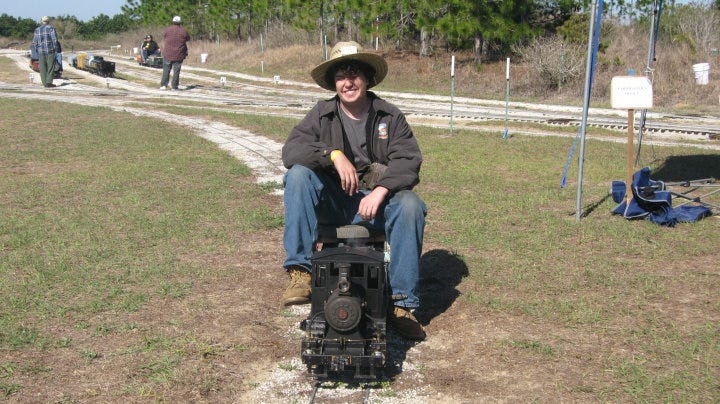
Another visit to Steamtown in his early teenage years led John Henry to discover “Railcamp”, an experience offered in Scranton and at other heritage railroad sites across the country. John Henry had begun writing his application before he even heard all the details, and was soon admitted to the immersive camp that gives young people a taste of all things railroad for a week. He attended the offering in Scranton first, then ventured out to the remote desert of Nevada to attend the camp at the Nevada Northern Railway Museum. As soon as he arrived in Ely, he felt a strong pull to the location; the camp scratched the surface of some itch he had only begun to discover, and he knew there was more to explore. He remained in touch with the folks at the railroad, and reached out about an “internship” that would satisfy a graduation requirement of his high school. The railroad had never considered an intern program before, but opted to give it a try and use John Henry as a guinea pig in some right. His summer was spent both getting dirty in the shop and on the trains the museum would operate, and from there John Henry was sold: Ely was the destination. He returned home to finish out his last year of high school before packing his bags and heading west – this time for good.
No sooner than arriving in Ely for the third time was John Henry on site at the railroad. Despite his mechanical inclination, John Henry was first hired onto the railroad as a part of the maintenance-of-way crew, helping ensure the track was safe for trains to run on When there was no work to do on track, John Henry found himself in the shop where there was never a shortage of tasks that needed to be done, and no shortage of questions John Henry wanted to ask the master mechanic – Al Gledhill. Al began to take a liking to John Henry and put him to work as much as he could, knowing he’d probably go onto be a mechanic once a spot opened up for him. Looking for some higher vocational training, John Henry researched college courses in the area and found a technical college in the town of Elko, about three hours north of Ely. He enrolled in their millwright program for the Fall to learn the basics of shopwork in a classroom setting, then would go to practice his new skills (and learn a ton of new swear words) at the railroad shop on the weekends. John Henry was voracious – he tore through his studies and worked long hours at the railroad, striking the knowledge while it was hot and immediately seeing his new skills in practice at a place he cared deeply for. After completing his degree in the millwright program, he had also amassed a handful of certifications at the railroad and was running and firing the steam locomotives that were the pride of the Nevada Northern. Many of these trips were made working with his friend Anthony DeBellis, who is just a year younger than John Henry, making the engine crew of the Nevada Northern collectively aged 37 between the two!


With one degree in his toolkit, John Henry began looking for more opportunities to learn. A machinist program in Carson City, Nevada seemed like an obvious next step, so John Henry enrolled and began to make long commutes between Carson City and Ely to learn on the weekdays and do on the weekends. He also began to volunteer with the Nevada State Railroad Museum in Carson City while in his program, and got to diversify his knowledge of railroad operations and mechanics with even more old machines that he took pride in maintaining. Graduating from this program in 2015, he moved back to Ely to learn that his alma mater of Great Basin Technical College was now offering a diesel mechanics program, and so he once again got his studies on and cursed at the machines he was learning to fix when not in a classroom. His appetite for knowledge was known by the railroad and they invested all they could to help him grow, something John Henry feels quite grateful for. Most all of what he learned in his studies has come back to help in the mysteries of working on antique machines, and he made sure to save his notes knowing they’d come in handy again soon.
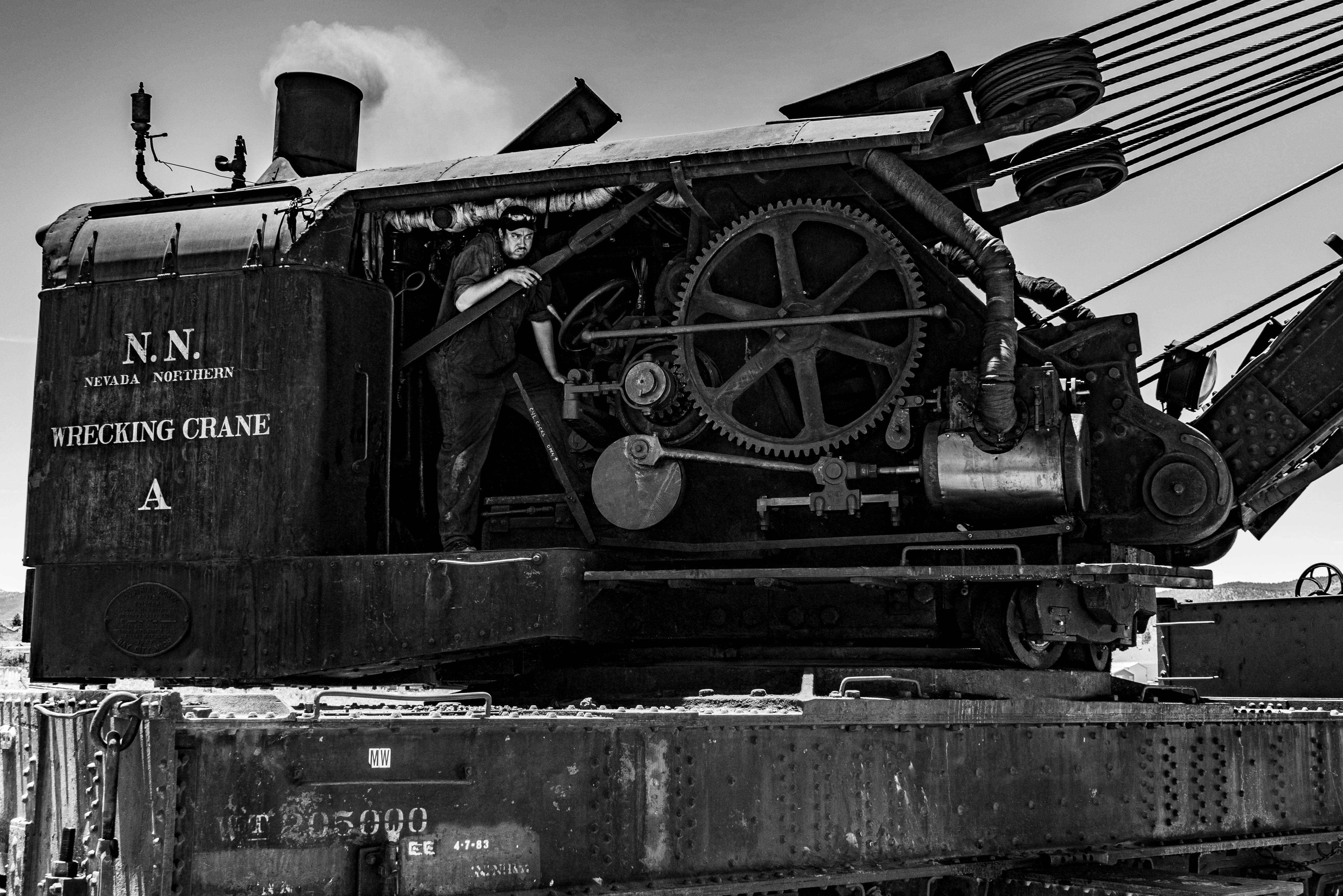
Armed with three degrees in various mechanical fields, John Henry was now working in the shop of the Nevada Northern and leading restorations that seemed impossible to a younger version of himself. The railroad always had their hands full with restorations and ongoing maintenance, and John Henry picked up a few pet projects that he hoped to see to fruition. The first of which was finding the cylinder liners for the two RS series locomotives at the railroad, to which he accomplished and helped ensure the railroad would have stockpiles of this part for years to come. Later, he would work with master mechanic Henry Stewart on the retubing of the boiler of one of the railroad’s three steam locomotives, No. 93. Al Gledhill passed away suddenly before the overhaul of the locomotive which left the railroad in a pinch, as with his passing was also the disappearance of decades of knowledge and experience. John Henry would then serve as the lead on returning the railroad’s second 2-8-0 to steam after sitting dormant for almost 70 years, working closely with Gary North - a machinist that had worked for the mining company that kept Ely on the map. John Henry likely drove North crazy with questions just the same as he had done to Al, and now he made sure to trickle knowledge down at every opportunity to anyone who wanted to learn. He stepped into the Master Mechanic’s role a few years after Gledhill’s passing once Steward retired, and now made sure to leave no bolt unturned in learning the skills of the people who came before him.
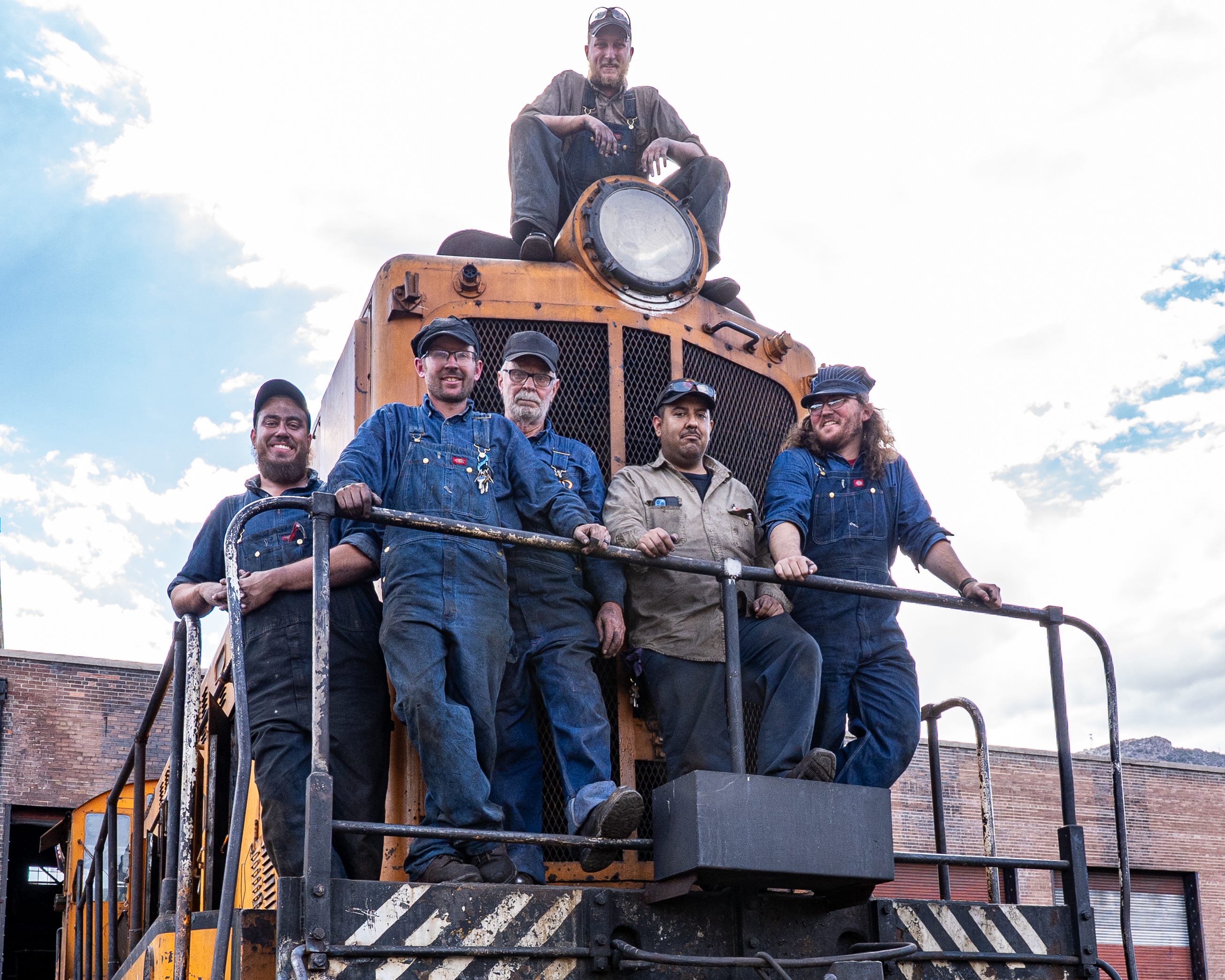
Standing at 6’8”, it’s an impressive feat to see John Henry McDonnell negotiate into the tight and confined spaces that old machines typically require their caretakers to become intimately familiar with. John Henry recounted the first time he wiggled himself into the firebox of a locomotive, fixing a mistake he made when laying a firebed of coal for the engine to burn the next day. He recalls it being an awkward fit, but he knew he was fixing his own mistake and this would prove why he shouldn’t do the same thing again. Lessons like these are things he carries forward now to the role he occupies, where he often sees young people come in and out of his shop, all hoping to take some skills with them. Especially with the interns the railroad brings on every summer (the program that he piloted), he tries to take a hands-on approach to teaching and asks the question “does that make sense” after every explanation he offers. He encourages questions, no matter how basic they seem, saying, “I might tease ya’ a little, but come ask anything and I’ll do my best to make you understand.” He noted too, “I’m still learning myself!” Having been the Master Mechanic of the famed national historic landmark for five years now, he hopes those who started in his shop and moved on took lessons and skills with them – both technical skills and how to effectively convey knowledge to those you’re working alongside. He tries to maintain a calm demeanor when working with his crews, noting that anger and ego do not contribute much to actually solving problems and getting equipment running. A fluent team of mechanics, machinists, and enthusiasts has always been the mantra that John Henry works to maintain in his shop, and he is proud of all the work he’s done to bring a piece of the past into the future while teaching visitors, volunteers, and staff alike on how to care for the equipment – and each other.
Thank you for reading our first full feature of Edition 3, and thank you to John Henry for sharing his story with us! Our next feature will detail the life of a railroad enthusiast who found themselves owning part of a start-up shortline railroad, make sure to follow along! Until then, I’m Max Harris – joined by Nick Martin and Jonah Collins – and we’ll see you down the line.